Site internet, built for construction.
We get job sites connected quickly and seamlessly. Multiple 5G networks, configured for your site address, live before any work begins.
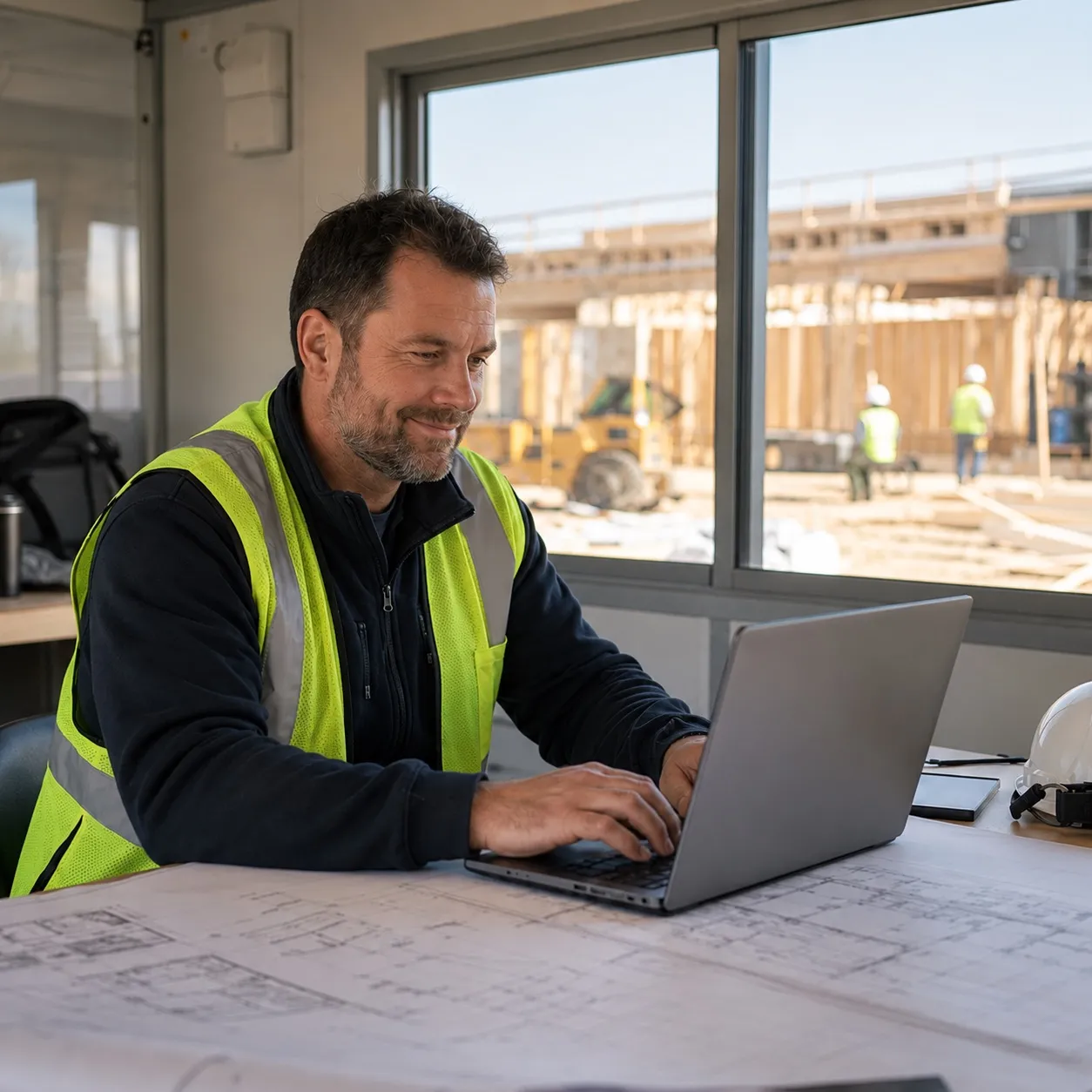
"With Waveform, it actually works. My primary ISP can drop completely, and my connection stays alive without me even noticing."
Bob R. Verified buyer
30-day free returns · No contracts · Preconfigured for your site
You've mobilized without internet before.
The trailer is in, the crew is on site, and the only connection is a phone hotspot on the window ledge. Drawings won't sync, inspection photos won't upload, and the people you are paying by the hour are waiting on a bar of signal. Every day the site can't get online is a day of crew you have already bought.
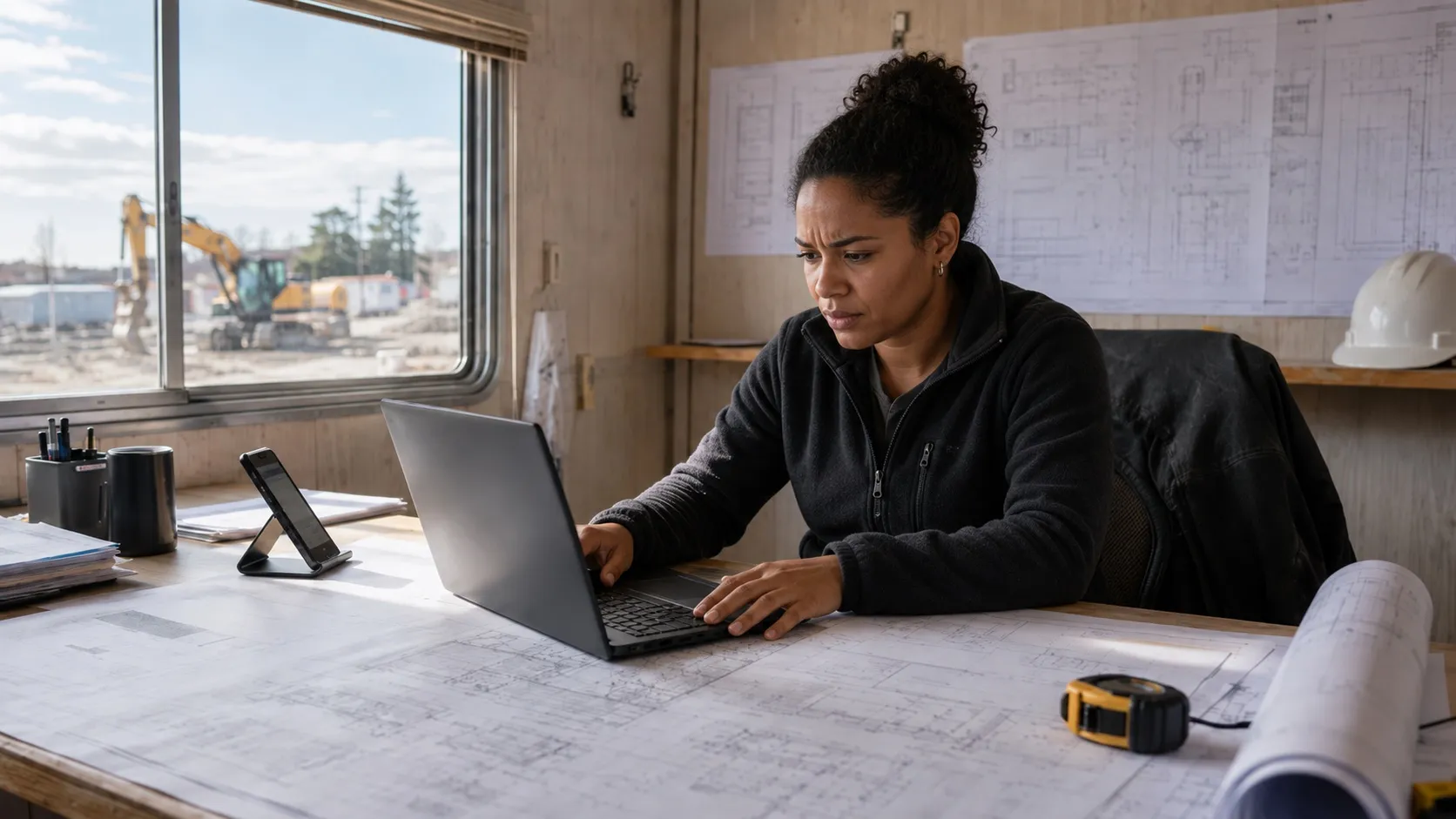
The site trailer.
"Six to eight weeks." That's what the local provider quotes for temporary internet on a nine-month build. Until then the trailer, the PM and every trade on site are sharing one phone hotspot.
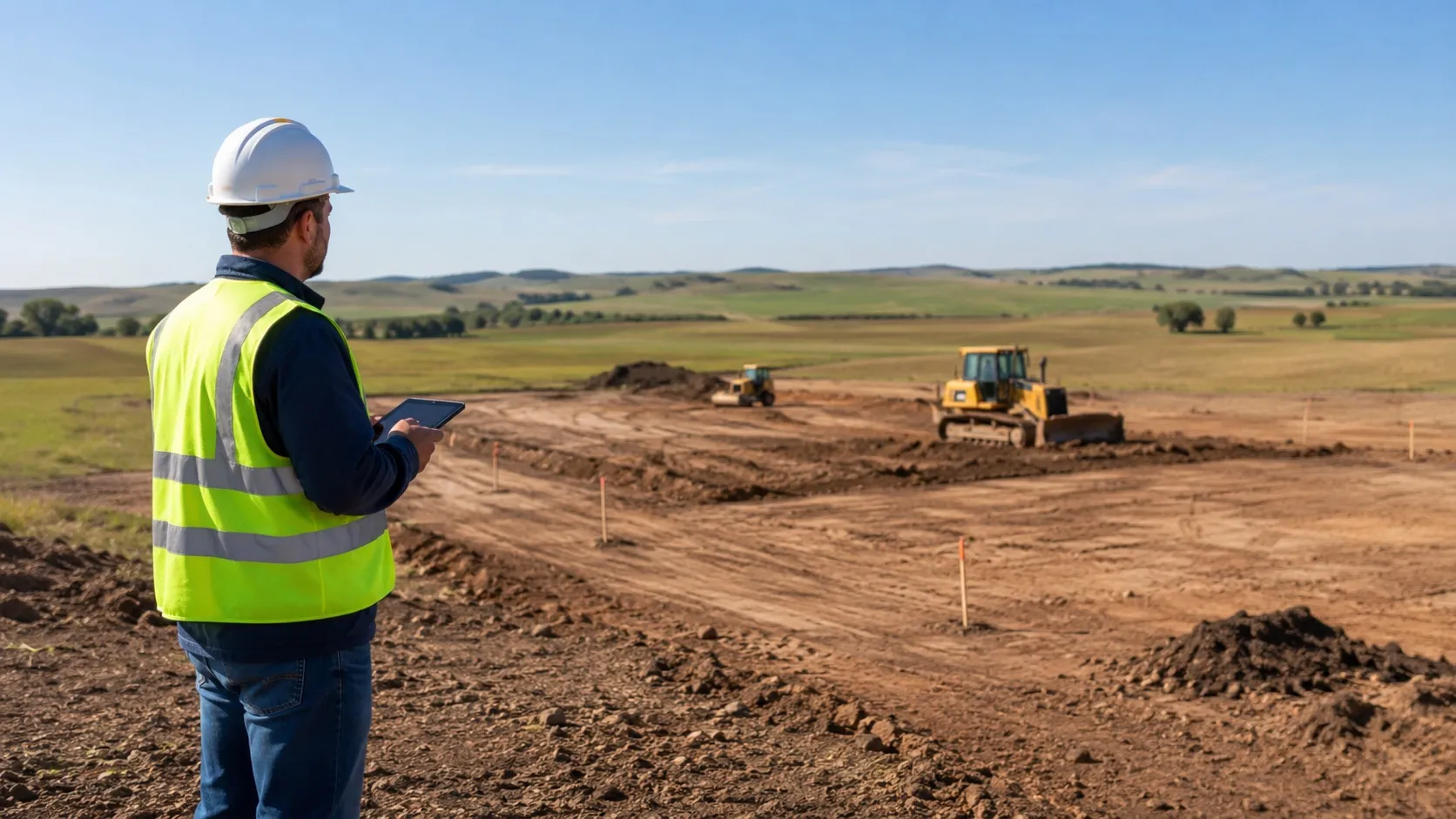
The remote build.
There's no fiber down that road, and there won't be before this job finishes. The drawings, the inspection photos and the payroll still have to get out somehow.
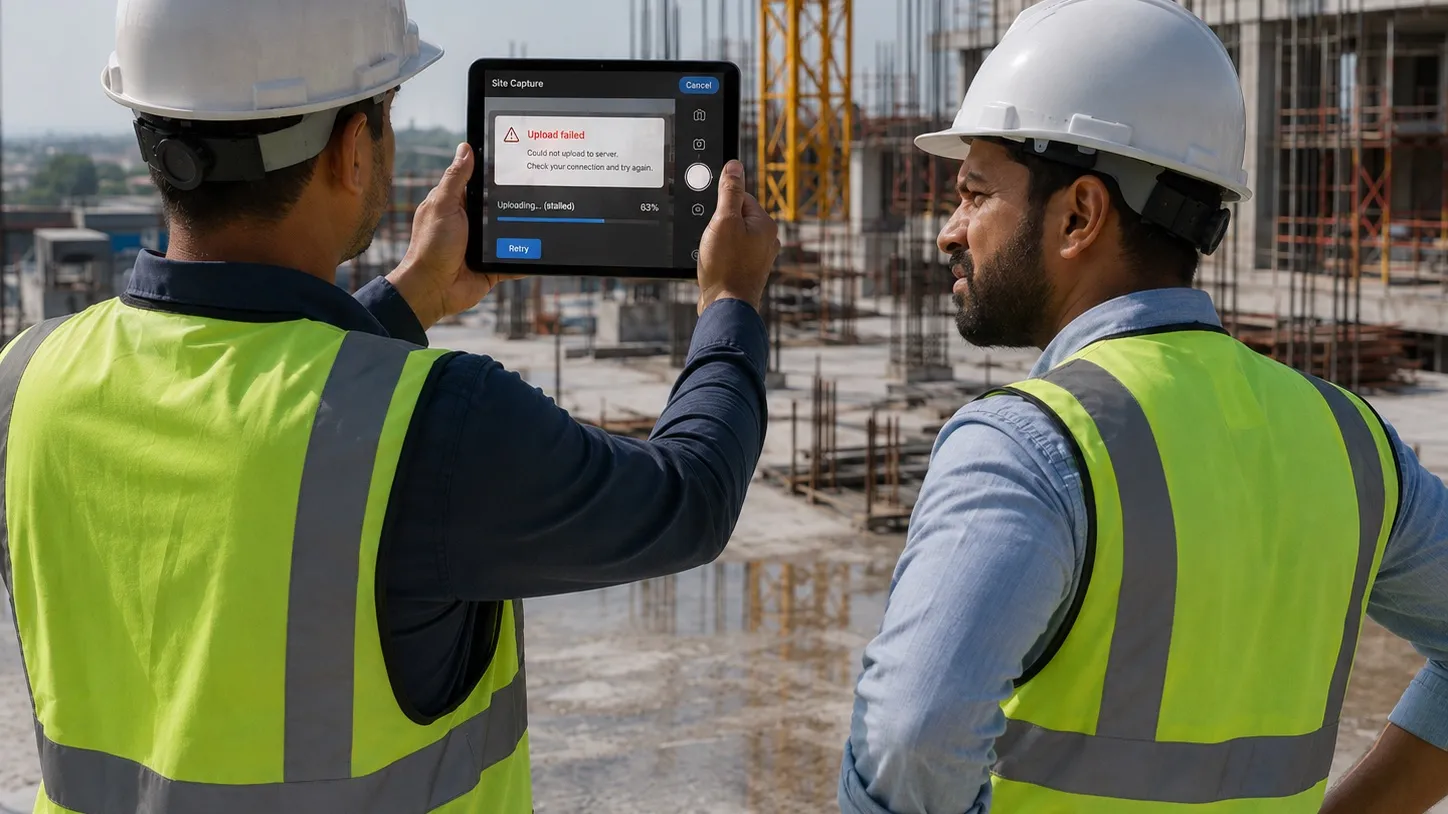
The inspection window.
The pour is booked, the inspector is standing on the deck, and the sign-off photo won't upload. Miss the window and you've lost the concrete, the crew and the day.
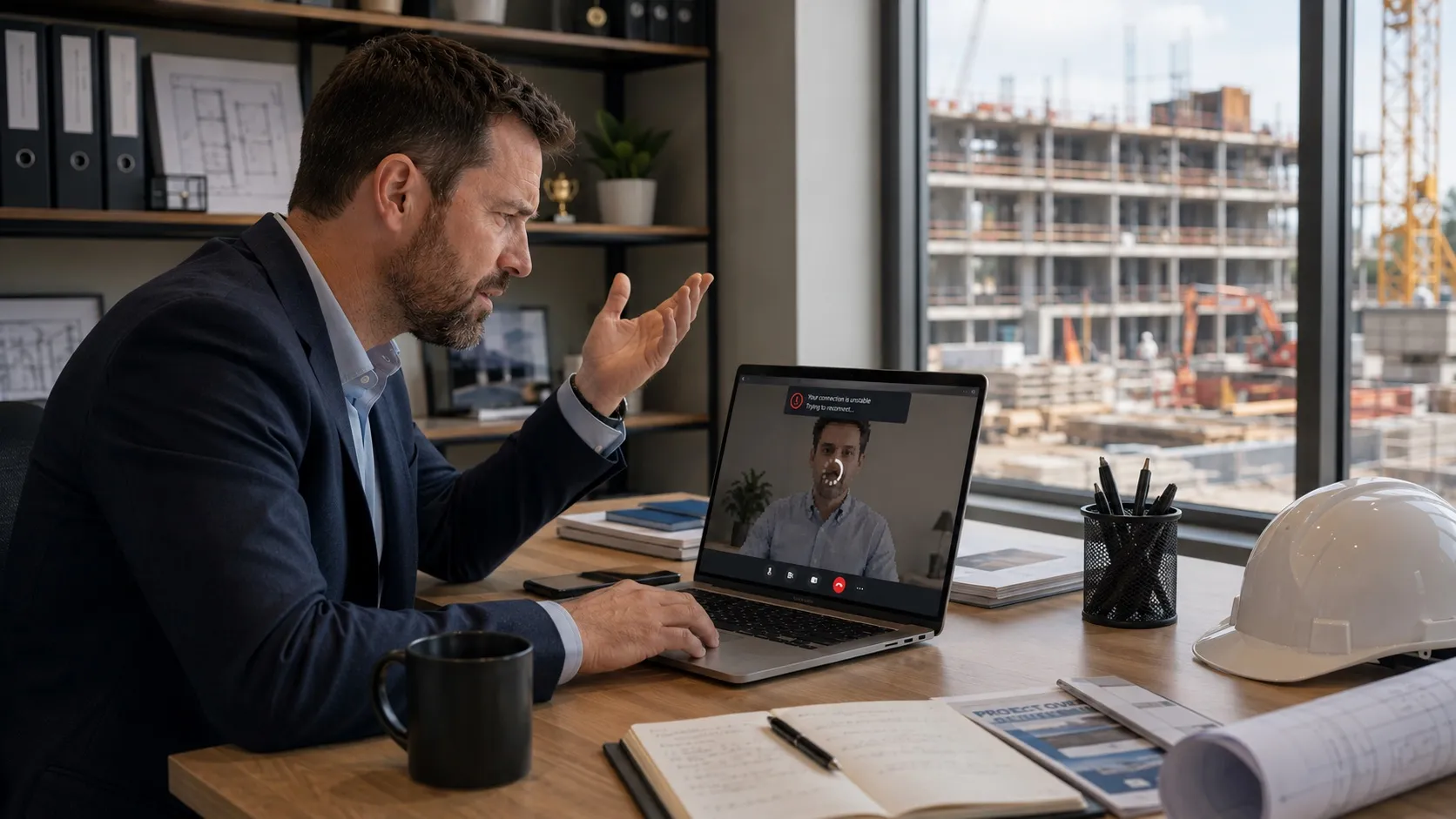
The multi-site contractor.
Cameras on six jobs, telematics on the plant, a security feed that only matters on the night it fails. When head office can't see a site, nobody can say whether it's the site or the system.
What's actually breaking
Usually, it's not the plan tool, or the camera system, or the project software. It's the one connection underneath everything, with nothing behind it when it drops.
Today: one connection, one failure point
A hotspot on the window ledge, or temporary internet that took two months to install. Almost everything on site leans on it: drawings, submittals, inspection uploads, cameras, payroll, the trailer phones. There is no second path, and no plan for the morning it stops.
With Waveform: multiple networks already working
Waveform brings multiple 5G connections on separate cellular networks and keeps both active from the day you mobilize. Critical traffic, like plan uploads, inspections, and trailer phones, can ride both connections at the same time. If one path fails, the other is already carrying traffic.
What Waveform Internet customers say
"We went from $780/month with mediocre performance and a ton of overhead, to $125/month with better performance and basically zero overhead. Someone on their team is actually watching our connection and reaches out before I even notice something's off. This stuff used to require an IT department or an expensive consultant."
Verified buyer · April 2026
"We switched to Waveform from T-Mobile and have had a very positive experience. Our speeds and reliability have improved significantly. … Most importantly, their customer service is top-notch. No chatbots, just real people."
Verified buyer · March 2026
Rated 5.0 by verified Waveform Internet customers. From the team behind Waveform, with 100,000+ systems deployed across all 50 states.
Built for the way your site actually works.
Waveform Internet runs multiple 5G networks at the same time, configured for your site address before the trailer lands. You get a working connection on day one and a second path already carrying traffic.
Multiple active networks
Multiple cellular networks on separate carriers, live at once. If one drops, slows down, or gets congested, your site still has a live path out.
Selective bonding for critical traffic
Plan uploads, inspections, trailer phones, and other sensitive traffic can use both connections at once for smoother failover. Less critical traffic uses whichever connection is performing best.
Managed by people who know the system
We configure the hardware, supply the SIM, monitor the connection, and handle support. One service, one bill, one team to call.
How bonding and automatic failover work
Up to three 5G connections on separate cellular networks run at the site, active all the time. Plan upload and site office traffic goes through an encrypted bonded tunnel, using every available connection at once and exiting through one persistent public IP. Everyday traffic, like crew Wi-Fi, streaming, and browsing, uses the best available single connection. Where a site does have a wired line, it joins the same setup as another path.
Built for your site, starting at
$240/month
On Waveform Internet Smart tier with Selective Bonding. Includes hardware, SIM, 5G data, monitoring, and support. No setup fee.
Setup in 5 minutes. No professional installation.
Most internet issues turn into a project.
The usual options are a service visit, booked weeks out and repeated at every location, or a DIY build with hardware, SIMs, failover rules, testing, and ongoing maintenance. This costs valuable time and money on any job site.
Waveform Internet doesn't.
Every unit ships preconfigured for the site it's going to. The SIM is installed, the hardware is tested, and the location is already in our monitoring system. Attach the antennas, plug in power, and it comes online.
Delivered
3 to 5 days · Preconfigured for your site
Plug in
Under 5 minutes · No IT needed
Online
Immediately · Multiple networks active
Monitored
24/7 · We usually see issues first
We monitor everything 24/7
Every connection is monitored 24/7 so unexpected outages get caught early. When latency rises, packet loss appears, or cellular signal degrades, our team sees it and fixes it. And if you do need to talk to us, you'll connect directly to the engineers monitoring and fixing it.
Acknowledged in
8 min avg
15 min max
Most issues resolved in
15-20 min avg
30 min max
After-hours resolution
~1 hr avg
1.5 hr max
Not sure where to start?
Talk to the people who built Waveform Internet. Tell us a little about your sites and we'll look at your locations, your current setup, and what actually needs protecting, then tell you what we'd recommend.
Thanks, we've got it. One of the team will get back to you about your setup. If you'd rather not wait, check availability at your address in the meantime.

Marcus

Austin

Sisanda

Ruan

Moe

Conold
Common questions from site teams
If your question isn't here, ask us directly.
Will this work with Procore, Autodesk Build, or Bluebeam?
Yes, and there's nothing to install on your side. Your project software never sees us; we're the network underneath it. Procore, Autodesk Build, Bluebeam, PlanGrid, Fieldwire, or anything else cloud-hosted behaves exactly as it does today. What changes is priority: a submittal going out gets served ahead of forty phones hunting for the crew Wi-Fi at lunch.
What about site cameras and security feeds?
Cameras are one of the better arguments for a second connection, because a feed is worth exactly nothing on the night it happens to be down. Camera traffic can sit in the protected lane, so it keeps reporting when one connection fails, and it keeps reporting overnight and at weekends when nobody is on site to notice.
Worth saying plainly: continuous upload from a bank of cameras is heavier traffic than most of what a site sends. Tell us how many you're running and we'll size the connection around them rather than leaving you to find the ceiling yourself.
Can we get to the cameras and the trailer network from off site?
Yes. This is where most site connectivity quietly fails, so it's worth checking against whatever you're using now.
Cellular connections normally sit behind carrier NAT, which means nothing can reach them from outside. That's why remote camera access over a hotspot or a consumer 5G box usually stops working. We can provide a static public IP at no cost on Smart tiers, so your recorder, your VPN, or whatever else needs reaching stays reachable from head office exactly as it would on a wired line.
Tell us what has to be visible from outside and we'll have the forwarding set up before the unit ships.
What happens during an internet outage?
Ideally the work carries on and nobody on site can tell you afterwards when it happened. Traffic moves to the surviving connection by itself, and anything bonded, uploads, inspections and trailer phones included, was already traveling both paths when the failure hit. Our team gets the alert directly, so the investigation usually starts before anyone walks over to the trailer to complain.
How fast is it?
Plenty for a working site. Project software, phones, cameras and crew Wi-Fi together are a light load by internet standards, and most of it runs at the native speed of your healthiest connection.
The bonded path is the one exception: it trades top speed for resilience and tops out around 200 Mbps. That ceiling is the hardware doing the encryption, not a cap we've set, and it applies only to traffic in the bonded lane. Drawing sets and photo batches move comfortably inside it; drone footage and point-cloud scans are the two things worth telling us about before you order.
How many connections do we actually get?
On most sites there's no wired line to build on, so the answer is two: two cellular connections on different networks, bonded, with the resilience coming from running more than one network at once rather than from a cable you don't have.
Where a site can't afford to be offline at all, or where one network is thin at that address, we can add a third. Every network you add is one more thing that has to fail at the same moment before anyone notices.
Starlink can be one of the paths too, and on remote sites it often should be. Send us the coordinates and we'll tell you what we'd build.
How do you handle multiple job sites?
One account, one point of contact, centralized billing, and a separately preconfigured unit for every address. After go-live, we watch each site around the clock and only escalate the things that need a decision from you.
Monitoring runs 24/7. Our team is staffed from 6am Eastern to 9pm Pacific, which covers site hours in every time zone we serve.
There's deliberately no customer dashboard. Monitoring is part of what you're paying us to do, so we do it, and we get in touch when something needs action.
What hardware do you ship me?
A Core Router configured for your specific site, with 5G built in and the SIM already seated. Where a design calls for extra cellular capacity or another network, we add an Add-On Modem. All of it is commercial-grade Peplink equipment meant to run around the clock. Trailers, container offices and below-grade levels often want an external antenna, and we work that out with you before anything ships.
How long until we're online after we order?
About a week, and most of that is shipping. We spend a day or two on configuration before the unit goes to the courier for 3 to 5 days, and the install at your end is measured in minutes. Sites can come online in parallel; the pace is usually set by your mobilization dates rather than by anything on our side.
If an address looks like it will need an antenna survey or custom mounting, we say so before you order, not after.
Can we keep crew Wi-Fi off the same network as project data?
Yes, and on a site with subcontractors and visitors coming through, you should. The Core Router supports separate VLANs, so guest and crew Wi-Fi can be walled off from the trailer network where your drawings, cameras and project software live, each with its own rules. Traffic through the bonded tunnel is encrypted in transit. If your client or your insurer sets specific network requirements, send them over and we'll walk them with you.
Will it work inside a metal trailer or below grade?
Usually, but this is the one thing worth checking rather than assuming. A steel container or a basement level attenuates cellular signal badly, which is exactly the situation external antennas exist for: the router sits inside, the antenna goes on the roof or the fence line, and the signal problem stops being one.
Power is the honest exception. Bonding does nothing for you when the generator drops, so if the trailer runs on temporary power, the router and access points belong on a small UPS. Tell us what the site looks like and we'll say what to plug in where.
What's the difference between failover and bonding?
Failover is sequential. One connection dies, another takes over, and there's a gap while that happens, which is how most backup products behave.
Bonding removes the gap by running connections simultaneously. We bond selectively, reserving it for traffic where an interruption costs money, like uploads, cameras, inspections and calls, and let everything else fail over intelligently instead.
Do I need a technical person to set this up?
No. Configuration happens here before we ship, and the physical install is antennas, two cables, and a wall outlet. Anything that needs adjusting later, we adjust remotely. Nobody on your staff has to become the network person.
How does this compare to T-Mobile Business Internet Backup?
It's a reasonable product for what it is: one 5G connection that steps in after your ISP fails, at a lower price than ours. If a brief gap during the switch is tolerable and nobody needs to be watching it for you, it may well be enough for some sites.
We're built for the sites where the gap is the problem. Multiple connections running at once, bonding on the critical traffic, hardware and SIM included, monitoring around the clock and a team on the other end of it. The extra cost buys the difference between a spare tire and a second engine already running.
How does this compare to SD-WAN services like Bigleaf?
SD-WAN platforms mostly assume ingredients you already own: a second connection installed, compatible hardware, and someone comfortable writing and maintaining failover policy. We show up with all of it in the box: connection, plan, router, configuration, monitoring, support.
If you have an IT team that wants to run the stack, SD-WAN done well is a fine route. If you'd rather buy the outcome than assemble the parts, that's what we're for.
Can I use this as my primary internet?
For most of the sites we talk to, primary is the whole point: there is no wired line to back up, and there won't be one before the job closes out. Cellular becomes the site's internet, and the resilience comes from running more than one network at once rather than from a cable you don't have. Where a temporary wired line does exist, we'll run it alongside the cellular rather than replace it, because two kinds of infrastructure beat one.
Does this work in rural areas without fiber?
This is most of what we do for construction. We test coverage against the site's coordinates before anything ships and tell you plainly what to expect, including when the answer is that a particular site is marginal. Where signal is thin, an external antenna on a mast or the fence line usually settles it. Where it genuinely isn't there, we'll say so rather than sell you a box that won't work.
Does this work with Starlink?
Yes, happily. A dish can be one of the connections we manage, and for genuinely remote sites it's often the right architecture. Satellite and cellular fail independently, where two wired providers often hang from the same pole down the road.
How much data does it use? Are there overage fees?
No overage fees, ever, and everyday traffic carries no cap at all. The bonded path is the only thing we meter: 250 GB a month on Smart. Drawings, submittals and site photos are small enough that most trailers sit well inside that.
Continuous camera upload is the one to watch, and drone or laser-scan work behind it. Both can push a site past the standard allowance, so tell us what you're running and we'll size it with you rather than let you find out in week three. If you do go over, we'll usually just cover it and come to you about a bigger allowance if it becomes a habit.
What if it doesn't work at one of our locations?
Send everything back inside the first 30 days for a full refund, hardware included, with no restocking fee and no one making it awkward. It doesn't happen often, because coverage gets checked against the site before we ship, but the exit stays open.
What happens when the job finishes?
The kit moves to the next site. The service is month to month and there's no penalty for a job closing out. Tell us the new address and we'll reconfigure the unit remotely, re-check coverage there, and update the monitoring, all before the trailer is craned into place.
If the next job hasn't started yet, send the kit back to us. We'll hold it and ship it out again when you're ready, so you're not paying through a gap. If you bought the hardware outright, keep it on the shelf instead and we'll switch the service back on when you need it. Construction runs on a different clock to a shop or an office, and the billing should follow the work.
Is there a contract?
No. The service is month to month; leave whenever you like. Hardware works one of two ways: buy it upfront and it's yours from day one, or rent it monthly for as long as you're a customer and send it back when you stop. And the first 30 days work like a trial: if it's not the right fit, everything goes back for a full refund.
Can I keep my existing router or networking gear?
Usually, yes. We slot in upstream of your current router and take over the multi-WAN decisions, and everything behind it keeps working exactly as it does today. Networks with more moving parts, like VLANs, VoIP phones, or camera recorders pinned to fixed addresses, get a design review with us before anything ships.
Unbreakable internet that keeps your job site working.
30-day free returns. No contract. Real human support to keep your business online.
Running a different business?
Every business breaks differently when the internet goes down. Pick the industry closest to yours and we'll show you what we protect and what it costs.