Across Kansas, reliable wireless connectivity is not a convenience, it is a production asset. Whether you manage a grain terminal along the Arkansas River or a fast-growing e-commerce fulfillment center outside Kansas City, you already know the limitations of WiFi dead zones, cell-carrier congestion, and leased-line costs. One example that illustrates the challenge is the state's thriving aviation-component manufacturing cluster around Wichita, where sprawling metal hangars and outdoor test pads make clean, low-latency connectivity almost impossible with conventional networks.
Why Kansas Facilities Are Turning To Private 5G
Kansas mixes heavy industry with vast rural acreage, harsh thunderstorms, and extreme seasonal temperature swings, all of which punish cabling and expose weaknesses in legacy WiFi. Private cellular solves several pain points:
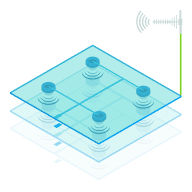
Coverage. A single Citizens Broadband Radio Service (CBRS) radio at 3.5 GHz can blanket hundreds of thousands of square feet indoors, and several square miles outdoors, something WiFi simply cannot do without thousands of access points and outdoor-rated enclosures.
Interference. CBRS spectrum is lightly licensed and protected by the FCC's Spectrum Access System, so it stays clean even in dense industrial parks. By contrast, 2.4 GHz and 5 GHz WiFi channels are saturated by corporate and residential traffic.
Control. Because a private 5G core lives on-premises or in your data center, IT teams integrate it directly with existing VLANs, zero-trust security, and quality-of-service rules. Public networks from AT&T, Verizon, and T-Mobile cannot offer that level of determinism.
Sectors already evaluating private networks in Kansas include aviation manufacturing, Class I rail yards, distributed wind-energy farms across the Flint Hills, and the rapidly expanding cold-storage warehouse space along Interstate 35. Tornado-resistant tilt-up concrete and insulated metal panel construction also tend to attenuate WiFi, making low-frequency cellular a more dependable choice indoors.
Private 5G Versus WiFi And Commercial Cellular
Private 5G pairs 3GPP Release 15 and 16 radio technology with CBRS or dedicated licensed spectrum. Compared with WiFi 6 or 7, private 5G:
- Uses channel widths up to 100 MHz yet operates at much higher transmission power, giving 4 to 10 times the range.
- Employs resource scheduling and SIM-based authentication, eliminating contention and spoofing typical in WiFi.
- Enables end-to-end network slicing so a latency-sensitive AGV robot fleet never competes with guest tablets.
Against public carrier 5G, a private network:
- Avoids per-device data plans, potentially saving millions over the life of a large fleet of scanners, cameras, and IoT sensors.
- Keeps traffic on your local network for sub-10 millisecond latency, critical for machine vision or PLC workloads.
- Guarantees coverage where macro networks are weak, for instance basements and steel-walled production areas.
For a deeper technical discussion see our Private Networks Guide.
Our Design And Deployment Process
We start with a rapid site snapshot. You send a floor plan, outdoor map, or simply a geo-pin of the area that needs coverage, along with the devices you plan to connect. Within a few days we deliver a concept design, preliminary bill of materials, and budget range.
When you are ready to proceed we perform a full RF model, simulate throughput, and finalize the parts list. Because we are vendor neutral we can choose the best mix of radios and core software from Celona, Baicells, Airspan, Moso Networks, Pente, or Highway9, then pair them with client devices from Peplink, Cradlepoint, Zebra, Digi, or Honeywell.
Waveform handles licensing, logistics, and on-site installation. Day one coverage is verified with drive tests and handheld scanners, then we remotely monitor key performance indicators and fulfill an ongoing service-level agreement. For temporary yards or pop-up events we can ship a "network in a box" that stands up in hours.
Proven Wireless Expertise
Our teams deliver connectivity projects nationwide, not just on the coasts. Recently we completed a wireless deployment for 23andMe, a leading genomics company in California. While the project was thousands of miles from Kansas, it demonstrates the rigor we bring to laboratory-grade environments that demand low RF noise and airtight security. The same playbook applies when we design a CBRS private network for a food-grade packaging plant in Hutchinson or a Class A office tower in Overland Park. Read the full case study here.
Typical Pricing
Indoor private 5G deployments in Kansas usually land between one and two dollars and fifty cents per square foot turn-key. A 500 000 ft² aircraft sub-assembly facility bills out around one million dollars, including the core, radios, installation, commissioning, and a year of managed service.
Outdoor coverage is where private cellular shines. In flat Kansas terrain it is common to cover a radius of 1.5 miles with three or four CBRS small cells mounted on existing poles, often for as little as one hundred thousand dollars. Because the network is SIM based you can lease or purchase handhelds, tablets, or cameras without any separate carrier contract.
Ready To Talk?
Waveform is a wireless integrator that delivers end-to-end Private 5G network solutions, from RF design to devices and support. Call us at (800) 637-4049 or get a custom private 5g design and quote today.